Ducati Panigale V4 Top Speed Mph

Ducati Panigale V4 Top Speed Mph

Wikipedia list article

The fastest production motorcycle for a given year is the unmodified motorcycle with the highest tested top speed that was manufactured in series and available for purchase by the general public. Modified or specially produced motorcycles are a different class, motorcycle land-speed record. Unlike those records, which are officially sanctioned by the Fédération Internationale de Motocyclisme (FIM), production model tests were conducted under a variety of unequal or undefined conditions, and tested by numerous different sources, mainly motorcycling magazines. This has led to inconsistent and sometimes contradictory speed statistics from various sources.

Fastest production motorcycles [edit]

Several models went out of production before being surpassed by a contemporary with a higher top speed. Until a model was introduced that was faster than any previous motorcycle, the fastest bike on the market for a given year was actually slower than an earlier, out of production bike. Models which are actual top speed record holders have their make, model, and speed in bold font, while slower models which were only the fastest in their own time are in italic. For example, in 1956, the Vincent Black Shadow remained the fastest motorcycle to date, with a 125 mph (201 km/h) top speed, but it was no longer in production. The fastest model on the market in 1956 was the BSA Gold Star Clubman, which at 110 mph (180 km/h) was not a record holder, but is listed for the sake of illustrating a more complete timeline.

Make & model Model years Engine Displacement Power Top speed Image Notes
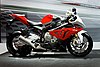
BMW S 1000 RR (second generation) 2019-present Inline four 999 cc (61.0 cu in) 205 hp (153 kW) 193 mph (310 km/h) Motor Balap BMW Superbike IIMS 2019.jpg By some measures, faster than MV Agusta F4 R 312.[1]
BMW S 1000 RR (first generation) 2009-2018 Inline four 999 cc (61.0 cu in) 199 bhp (148 kW) 188 mph (303 km/h) Paris - Salon de la moto 2011 - BMW - S1000 RR - 003.jpg By some measures, faster than MV Agusta F4 R 312. BMW considered to have initiated the "gentlemen's agreement"; first party to agreement to exceed self-imposed limit.[2]
MV Agusta F4 R 312 2007-08 Inline four 998 cc (60.9 cu in) 183 bhp (136 kW) 185–193 mph (298–311 km/h) MV Agusta F4 1000 R 312.jpg First European motorcycle exceeding "gentlemen's agreement"; MV Agusta not known to have been a party.[3] [4] [5] [6] [7]
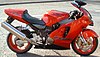
Kawasaki ZX-14 2006– Inline four 1,352 cc (82.5 cu in) 163.3 hp (121.8 kW)† 186 mph (300 km/h) Kawasaki-ZZR1400 2007TMCS.jpg Speed limited[8]
Kawasaki ZX-12R 2000–05 Inline four 1,199 cc (73.2 cu in) 178 bhp (133 kW) 186 mph (300 km/h) Kawasaki Ninja ZX-12R.jpg Speed limited[9] [10] [8]
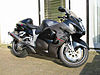
Suzuki Hayabusa (first generation) 2000–2007 Inline four 1,299 cc (79.3 cu in) 173 bhp (129 kW) 186 mph (300 km/h) 2002modelblauwzwart.jpg Speed limited[10] [8] [11] [12]
Suzuki Hayabusa (first generation) 1999 Inline four 1,299 cc (79.3 cu in) 173 bhp (129 kW) 188–194 mph (303–312 km/h) 1999modelzwart.JPG Last model before gentlemen's agreement.[10] [8] [11] [12]
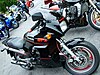
Honda CBR1100XX Super Blackbird 1996–2007 Inline four 1,137 cc (69.4 cu in) 162 bhp (121 kW) 170–180 mph (270–290 km/h) Honda CBR 1100 XX silver vr.jpg [10] [8]
Bimota YB8 Furano 1992-1993 Inline four 1,002 cc (61.1 cu in) 164 hp (122 kW) 172 mph (277 km/h)

Bimota Furano YB8.jpg

By some measures, faster than Kawasaki Ninja ZX-11.[13]
Kawasaki Ninja ZX-11 1990–2001 Inline four 1,052 cc (64.2 cu in) 145 bhp (108 kW) 169–176 mph (272–283 km/h) Kawasaki ZZR1100 01.jpg [10] [8] [9] [14]
Bimota YB6 EXUP 1989–1990 Inline four 1,002 cc (61.1 cu in) 147 bhp (110 kW) 170 mph (270 km/h) Yamaha Bimota YB6 1000.jpg [10]
Yamaha FZR1000 "EXUP" 1989-1995 Inline four 1,003 cc (61.2 cu in) 145 hp (108 kW) 167 mph (269 km/h) Yamaha FZR1000 "EXUP" (1989).jpg [15]
Kawasaki Tomcat ZX-10 1988–1990 Inline four 997 cc (60.8 cu in) 135 hp (101 kW) 165 mph (266 km/h) Kawasaki ZX-10.jpg [9] [16]
Yamaha FZR1000 "Genesis" 1987-1988 Inline four 989 cc (60.4 cu in) 135 hp (101 kW) 158.4–160 mph (254.9–257.5 km/h) Yamaha FZR1000 MY 1989 at Invercargill NZ.jpg By some measures, faster than Honda CBR1000F.[17] [18]
Honda CBR1000F 1987-1999 Inline four 998 cc (60.9 cu in) 132 hp (98 kW) 154–164 mph (248–264 km/h) Flickr - ronsaunders47 - HONDA CBR 1000F MOTORCYCLE..jpg [17] [19] [20]
Suzuki GSX-R 1100 (G-H-J) 1986-1988 Inline four 1,052 cc (64.2 cu in) 125 hp (93 kW) 160 mph (257 km/h) Suzuki GSX-R1100.JPG [17]
Kawasaki GPZ900R Ninja 1984–1996 Inline four 908 cc (55.4 cu in) 113–115 bhp (84–86 kW) 151–158 mph (243–254 km/h) Kawasaki GPZ900R Ninja 01.jpg [10] [21] [22]
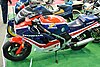
Honda VF1000R 1984–1988 V-four 998 cc (60.9 cu in) 122 bhp (91 kW) 150 mph (240 km/h) V Retro Auto&Moto Galicia, Honda VF 1000 RF, 1984.JPG [10] First to exceed Vincent Black Lightning after 35 years
Laverda Jota 1976–1981 Inline three 981 cc (59.9 cu in) 90 bhp (67 kW) 140–146 mph (225–235 km/h) LAVERDA JOTA 1000cc. ITALY 1976-1982.jpg [10] [23] [24]
Ducati 900SS 1975–1982 V-twin 864 cc (52.7 cu in) 79 bhp (59 kW) 135 mph (217 km/h) Ducati 900SuperSport.JPG [10] [25]
Kawasaki Z1 1972–1975 Inline four 903 cc (55.1 cu in) 82 bhp (61 kW) 132 mph (212 km/h) KAWASAKI Z1.jpg [10] [26]
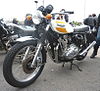
BSA Rocket 3/Triumph Trident 1968–1975 Inline three 740 cc (45 cu in) 58 bhp (43 kW) 125 mph (201 km/h) * T160 Triumph Trident 750cc motorcycle.jpg [10]
Harley-Davidson XLCH Sportster 1958–1971 V-twin 883 cc (53.9 cu in) 55 bhp (41 kW) 122 mph (196 km/h) Harley-Davidson XLCH Sportster 1969.jpg [27]
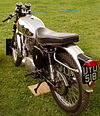
BSA Gold Star Clubman 1956–1963 Single 499 cc (30.5 cu in) 42 bhp (31 kW) 110 mph (180 km/h) BSA Gold Star Clubmans three quarter rear.jpg [10]
Vincent Black Lightning 1949–1952 V-twin 998 cc (60.9 cu in) 70 bhp (52 kW) 150 mph (240 km/h) VINCENT Black Lightning.jpg [10] [21] [28] [29] First to exceed Brough Superior SS100 Pendine after 22 years. Record held for 35 years.
Vincent Series A Rapide 1936–1940 V-twin 998 cc (60.9 cu in) 45 bhp (34 kW) 110 mph (180 km/h) [10]
Crocker V-twin 1936–ca. 1941 V-twin 998 cc (60.9 cu in) 50 bhp (37 kW) 110 mph (180 km/h) Crocker-right.jpg [10]
Brough Superior SS100 Alpine Grand Sports 1934–1940 V-twin 996 cc (60.8 cu in) 75 bhp (56 kW) 110 mph (180 km/h) Brough Superior SS 100 Alpine Grand Sports.jpg [30] [ page needed ]
Brough Superior SS100 Pendine 1927–1940 V-twin 981 cc (59.9 cu in) 45 bhp (34 kW) 110 mph (180 km/h) [30] [ page needed ] Record held for 22 years
Brough Superior SS100 1925–1940 V-twin 988 cc (60.3 cu in) 45 bhp (34 kW) 100 mph (160 km/h) Brough Superior of T.E. Lawrence.jpg [10] [21]
Excelsior V-twin 1918–1931 V-twin 992 cc (60.5 cu in) 20 bhp (15 kW) 80 mph (130 km/h) [10]
Cyclone V-twin 1916–1917 V-twin 996 cc (60.8 cu in) 25 bhp (19 kW) 85 mph (137 km/h) 1914 Cyclone (2) - The Art of the Motorcycle - Memphis.jpg [10]
Pope Model L 1914–1920 V-twin 999 cc (61.0 cu in) 12 bhp (8.9 kW) 70 mph (110 km/h) Pope L14 1000 cc 1914.jpg [10] [23]
Williamson Flat Twin 1913–1920 Flat twin 964 cc (58.8 cu in) 55 mph (89 km/h) 1913 Williamson Flat Twin motorcycle.JPG [10]
Scott two speed 1912– Parallel twin 532 cc (32.5 cu in) 3 bhp (2.2 kW) 50 mph (80 km/h) Scott 550 1913.jpg [10]
FN Four 1911–1931 Inline four 491 cc (30.0 cu in) 4 bhp (3.0 kW) 40 mph (64 km/h) FN 363 cc viercilinder 1905.jpg [10] [21]
Werner New Werner 1901–1908 Single 230–333 cc (14.0–20.3 cu in) 2–3.25 bhp (1.49–2.42 kW) 30 mph (48 km/h) Werner 230 cc 1904.jpg [21] [31] [32] [33]
Werner Motocyclette 1898–1900 Single 216 cc (13.2 cu in) 15.5–22 mph (25–35 km/h) Werner Motocyclette advert 1900.jpg [31] [32] [33] [34]
Hildebrand & Wolfmüller 1894–1897 Parallel twin 1,500 cc (92 cu in) 2.5 hp (1.9 kW) 25–28 mph (40–45 km/h) Hildebrand-Wolfmüller 1894.jpg First production motorcycle.[10] [21]
* ^ Other models that tied the Trident at 125 mph (201 km/h) are the 1972 Laverda SFC and Moto Guzzi V7 Sport.[10]
† ^ Rear wheel horsepower. See Motorcycle testing and measurement.

Motorcycles excluded from the list [edit]

Some motorcycles were not considered to be the fastest production vehicles, for various reasons. Here is a list of some well known motorcycles that have not been able to meet standards needed to be the fastest production motorcycles.

Make & model Model years Engine Displacement Power Top speed Image Notes
Kawasaki Ninja H2R 2015-present Inline 4 998 cc (60.9017 cu in) 310/326 horsepower (230/243 kW; w/out ram air) 250 mph (400 km/h) Excluded as the record-beating H2R variant is track-only and not street-legal.[35]
Lightning LS-218 2014-present Electric motor N/A 200 bhp (150 kW) 216 mph (348 km/h) Lightning LS-218 (19805047992).jpg The 216 mph record was set using an LS-218 modified from street-legal form, with "high-speed gearing and fairing". The top speed of the stock production vehicle has not been clearly defined by an independent, verifiable source.

Otherwise, first electric vehicle to be considered for the position of the world's fastest street-legal production motorcycle,[36] [37] [38] to have won against ICE motorcycles in a professional road-based event and to have won any such race using only solar power.[39]

Ducati Panigale R 2013-2017 V-twin 1,198 cc (73.1 cu in) 202 bhp (151 kW) 202 mph (325 km/h) Ducati 1199 Panigale R (8226624471).jpg Top speed achieved with OEM track-only exhaust system.[40] [41]

Gentlemen's agreement to end competition [edit]

After just over a century of one-upmanship by motorcycle manufacturers, beginning with the 1894–1897 Hildebrand & Wolfmüller, the competition to create the fastest production motorcycle reached a truce, with the arrival of the 1999 Suzuki Hayabusa, that lasted about 8 years.[42] [9] [43] [44] A gentlemen's agreement was made among the major motorcycle manufacturers to limit the speed of their machines to 300 km/h (186 mph), starting with 2000 models.[42] [9] [45]

After the 1999 Hayabusa sent shockwaves by exceeding the Honda CBR1100XX's record by more than 10 mph (16 km/h), and rumors and leaks from Kawasaki hinted that their upcoming 2000 Ninja ZX-12R would pass the 200 mph (322 km/h) milestone, some regulators and politicians in Europe called for an import ban against high speed motorcycles.[42] There were fears that there would be "an outbreak of illegal racing as riders try to break the 200 mph barrier".[46] [47] To preempt regulation and avoid negative publicity, the manufacturers voluntarily ended the race to ever higher speeds.[42] [45]

Sources vary as to whether this unofficial agreement is precise or only approximate, and whether it is defined as 300 km/h or as 186 mph, though the European and Japanese manufacturers normally use metric units. While Honda did announce that its motorcycles would not go faster than 300 km/h, Suzuki and Kawasaki would not speak on record about this issue.[48] The agreement between them and the other brands has never been officially acknowledged by the manufacturers, though media sources report it via unnamed informants, and by testing the top speed of motorcycles known to be capable of exceeding the arbitrary maximum.[48] [49] So for 2000[9] models and later motorcycles, the question of which brand's bike was fastest could only be answered by tampering with the speed limiting system, meaning that it was no longer a contest between stock, production motorcycles, absolving the manufacturer of blame and letting those not quite as fast avoid losing face.[49] But the speed war continued underground, out of the spotlight, with fierce competition among enthusiasts of the "200 mph club", albeit with the slight technical modification necessary to bypass the speed limiter, separating that war from the ostensibly at-peace world of stock motorcycles.[45] [50]

Breakaways from the agreement [edit]

MV Agusta advertised their 2007 F4 R 312 as capable of 312 km/h (194 mph), hence the "312" in the name, "because MV sees no reason to abide by the manufacturers' agreement ... Politics be damned: MV is Italian and the Italians have a national imperative to make their bikes as fast as possible," in the opinion of motoring journalist Roland Brown.[3] [4] Italian magazine Motociclismo claimed to have achieved 193.24 mph (310.99 km/h) testing the F4 R 312, more or less confirming the claimed speed and tying, if not exceeding, the 1999 Suzuki Hayabusa's tested speeds of 188–194 mph (303–312 km/h),[5] whereas Sport Rider were only able to achieve a 185.4 mph (298.4 km/h) top speed, stating that "it would take a major horsepower boost in order to make up the 8 mph deficit".[51]

Cycle World reported that "the same BMW who instigated the 'agreement' in the first place" had broken it with the 188-mile-per-hour (303 km/h) BMW S1000RR, whose top speed was reported in July, 2010.[9]

The 2013 Ducati 1199 Panigale R was delivered with an electronic speedometer that blanked when the motorcycle exceeded 186 mph (300 km/h), leading commentators to question if Ducati was signaling their withdrawal from the gentlemen's agreement.[52] [53]

In 2014, Kawasaki announced that the upcoming Ninja H2R will have a non-street legal "track-only" version making 296 hp (221 kW) that will not have a speed limiter, reaching 210 mph (340 km/h) in testing, but Kawasaki did not specify whether they planned to speed limit the street-legal version, which has about 200 hp (150 kW), to conform to the gentlemen's agreement.[54]

See also [edit]

  • Motorcycle testing and measurement
  • Motorcycle land-speed record
  • List of fastest production motorcycles by acceleration

Notes [edit]

  1. ^ Meloni, Fabio (September 2019). "Comparativa supersportive a Rijeka" [Supersport comparison in Rijeka]. Motociclismo (in Italian). No. 2772. Edisport Editoriale S.r.l. p. 110. ISSN 0027-1691.
  2. ^ "History of Motorcycle Speed- Top Speeds of Vintage/Modern Motorcycles – Cycle World". 2012-04-07. Archived from the original on 2012-04-07. Retrieved 2017-10-05 .
  3. ^ a b Brown, Roland (June 2007), "High-rollin' rocketship: from Italy with love, the world's fastest production motorcycle.", Motorcyclist, pp. 54+, retrieved 2012-04-28
  4. ^ a b F4 1078 RR 312 - RR 1+1 312 Model Year 2010. F4 RR 312:Art and Power In 190 HP (press release), MV Agusta, archived from the original on 2013-02-18, retrieved 2012-04-28
  5. ^ a b Corbetta, Luigi (2010), Legendary motorcycles, Translated by Marco Visenti, VMB Publishers, pp. 280–283, ISBN978-88-540-1538-8As reported in Motociclismo magazine (Italy) CS1 maint: postscript (link)
  6. ^ Kunitsugu, Kent (June 29, 2010). "Ducati 1098S Vs MV Agusta F4 R 312 - High Dollar Hardware". Sport Rider. Retrieved March 6, 2016.
  7. ^ Cernicky, Mark (May 9, 2007). "First Ride: MV Agusta F4 R312". Cycle World. Retrieved May 5, 2016.
  8. ^ a b c d e f "Performance Index '10" (PDF), Motorcycle Consumer News, Bowtie Magazines, 2010, archived from the original (PDF) on 2010-02-15, retrieved 2011-02-14
  9. ^ a b c d e f g John Burns (April 2, 2012), "Fifty years of "Do you have any idea how fast you were going?": A brief history of Ludicrous Speed", Cycle World, archived from the original on April 7, 2012
  10. ^ a b c d e f g h i j k l m n o p q r s t u v w x y Brown, Roland (2006), The Ultimate History of Fast Motorcycles, Bath, UK: Parragon, pp. 214–215, ISBN1-4054-7303-7
  11. ^ a b Catterson, Brian (June 1999), "Birds of pray", Cycle World, pp. 36–46
  12. ^ a b Guinness World Records 2000 Millennium Edition. Guinness World Records Ltd. 1999. p. 179. ISBN0-85112-098-9.
  13. ^ Braglia, Claudio (April 1992). "Tuta obbligatoria". In Moto. Conti Editore S.r.l.
  14. ^ Burns, John (December 24, 2013). "30 Years of Ninjas: 1984 GPz900 Ninja to 1990 ZX-11!". Cycle World. Retrieved March 7, 2016.
  15. ^ Yamaha Fzr 1000 (Road Test Portfolio). Brooklands Books. 1 Feb 2011. pp. back cover. ISBN978-1855209138.
  16. ^ "Superbike Comparison Test", Cycle World, Newport Beach, California: Hachette Filipacchi Media U.S., pp. 27–41, September 1988, ISSN 0011-4286
  17. ^ a b c Braglia, Claudio (1987). "Mille e una notte". Motosprint. Conti Editore Srl.
  18. ^ Lees, Howard (27 May 1987). "A question of speed". Autocar: 38–42.
  19. ^ "Power Play: Honda CBR1000F vs. Kawasaki ZX-11 vs. Suzuki Katana 1100 vs. Yamaha FJ1200", Cycle World, Newport Beach, California: Hachette Filipacchi Media U.S., pp. 32–41, April 1993, ISSN 0011-4286
  20. ^ Salvadori, Clement (April 20, 2006). "Retrospective: Honda CBR1000F Hurricane: 1987-1988". Rider . Retrieved May 6, 2017.
  21. ^ a b c d e f Solomon R. Guggenheim Museum, Field Museum of Natural History, Museo Guggenheim Bilbao (2001), Krens, Thomas (ed.), The Art of the Motorcycle, Guggenheim Museum, ISBN978-0-8109-6912-4 CS1 maint: multiple names: authors list (link)
  22. ^ Walker, Mick (2006), Motorcycle: Evolution, Design, Passion, JHU Press, pp. 172, 174–5, ISBN978-0-8018-8530-3
  23. ^ a b Carroll, John (1997), The Motorcycle a Definitive History: A Comprehensive Chronicle of Motorcycles Throughout the World , Smithmark, ISBN0-8317-6292-6
  24. ^ Smith, Robert (July–August 2009), "The Laverda Jota 1000", Motorcycle Classics , retrieved 2011-06-23
  25. ^ Falloon, Ian (2004), Standard Catalog of Ducati Motorcycles 1946–2005, Iola, WI: KP Books, pp. 102–106, ISBN0-87349-714-7
  26. ^ Siegal, Margie (May–June 2006), "1973 Kawasaki Z1: King of the Road; The Kawasaki Z1 was 900cc of pure power and precision", Motorcycle Classics , retrieved 2011-06-23
  27. ^ Harley Handful Motorcycle Mechanics, September 1965, pp.47-49
  28. ^ Wasef, Basem; Leno, Jay (2007), Legendary Motorcycles, Motorbooks International, pp. 33–39, ISBN978-0-7603-3070-8 , retrieved December 31, 2017
  29. ^ Ensanian, Greg (November 22, 2016). Discovering the Motorcycle: The History. The Culture. The Machines. Equus Potentia Publishing. p. 414. ISBN978-0996391900 . Retrieved December 31, 2017.
  30. ^ a b Miller, Peter (2009). Brough Superior: The Complete Story. Crowood Press. ISBN978-1847971128.
  31. ^ a b Brown, Roland (2004), History of the Motorcycle, Parragon, ISBN1-4054-3952-1
  32. ^ a b Tragatsch, Erwin, ed. (1977), The Illustrated Encyclopedia Of Motorcycles (1985 ed.), Secaucus, New Jersey: Chartwell Books, ISBN0-89009-868-9
  33. ^ a b Setright, L. J. K. (1976). Motorcycles. Weidenfeld & Nicolson. ISBN978-0-297-77234-7.
  34. ^ Werner Motors, Grace's Guide to British Industrial History, March 31, 2013, retrieved 2013-04-20
  35. ^ "Kawasaki Ninja H2R | Closed-Course Hypersport Motorcycle | 310 PS". www.kawasaki.com . Retrieved 2020-07-30 .
  36. ^ "Specifications | Lightning Motorcycles". Retrieved 2021-03-09 .
  37. ^ "SECTION 6 - BONNEVILLE NATIONAL CAR RECORDS". scta-bni.org. Southern California Timing Association and the Bonneville Nationals Inc. Retrieved 9 March 2021.
  38. ^ "Greased Frightening – Lightning Motorcycle's Scary-fast LS-218: MD Riding Impression". Motorcycle Daily . Retrieved 2020-07-30 .
  39. ^ "Lightning Beats The World Best Gas Motorcycles at PPIHC | Lightning Motorcycles". Retrieved 2020-07-30 .
  40. ^ "The 1199 Panigale R is the ultimate Ducati". Road & Track. 22 April 2013. Retrieved 9 March 2021.
  41. ^ "Review: 2013 Ducati 1199 Panigale R - RideApart". RideApart.
  42. ^ a b c d Brown, Roland (2 October 1999), "200mph superbike has its makers scared; [1F Edition]", The Times, London, UK: News Corporation, p. 53, ISSN 0140-0460
  43. ^ Trevitt, Andrew (June 30, 2010), "Big Dogs: Uncorking the 'Busa and ZX-12", Sport Rider , retrieved 2011-06-24
  44. ^ "2000 Suzuki GRS1300R Hayabusa Program #1922", Motor Week, 5 February 2000, archived from the original on 2004-03-13, retrieved 2011-06-24
  45. ^ a b c Boule, Joe (21 July 2000), "Putting the brakes on big bikes: Kawasaki backs off 300 km/h barrier amid rumours of a speed cap; [Final Edition]", Ottawa Citizen, Ottawa, Ontario: James Orban, p. C.1.FRO, ISSN 0839-3222
  46. ^ Cole, Bernard (14 March 1999), "High-speed fears over superbikes. [Early Edition]", Sunday Mercury, Birmingham, UK: Trinity Mirror, p. 6, ISSN 0039-5242
  47. ^ Richardson, Mark (3 July 1999), "Adrenalin rush should not be a prelude to death; Young novices and fast bikes don't mix; [1 Edition]", Toronto Star, Toronto, Ontario: B.H. Honderich, p. 1, ISSN 0319-0781
  48. ^ a b Cook, Marc (June 2000), "Conspiracy theory; Are Kawasaki and Suzuki secretly trying to slow you down?", Motorcyclist, Source Interlink Media, ISSN 0027-2205
  49. ^ a b "End of the arms race?; Why the '99 Hayabusa might be the last king of speed", Motorcyclist, Source Interlink Media, p. 31, June 2000, ISSN 0027-2205
  50. ^ Ridley, Harriet (2006-09-09), "I'm in the club.", The Daily Telegraph, London, UK: Telegraph Media Group, OCLC 49632006, retrieved 2010-05-24
  51. ^ Kunitsugu, Kent (June 29, 2010). "Ducati 1098S Vs MV Agusta F4 R 312 - High Dollar Hardware". Sport Rider. Archived from the original on February 14, 2015.
  52. ^ Aaron Frank (July 2013), "2013 Ducati 1199 Panigale R — First Ride", Motorcyclist , retrieved 2013-04-20 , Nicky Hayden, who also attended the launch and who presumably gets an even better drive out of T11, tells us the Panigale R continues to accelerate even after the screen goes blank, suggesting that Ducati has opted out of the gentleman's agreement that electronically limits top-speed to 300 km/h, or 186 mph.
  53. ^ Blake Conner (March 22, 2013), Ducati 1199 Panigale R First Ride, Cycle World, retrieved 2013-04-20 , [T]he R doesn't have an electronic governor to prevent it from exceeding the 186-mph limit agreed upon by the motorcycle manufacturers for more than a decade... This may well be the fastest stock, production model currently made.
  54. ^ Kawasaki Ninja H2R will go 'quite a bit faster than 210mph': No 186mph 'gentleman's agreement' for track-only R version, Visordown, October 6, 2014

Ducati Panigale V4 Top Speed Mph

Source: https://en.wikipedia.org/wiki/List_of_fastest_production_motorcycles
Share:

2009 Chevrolet Camaro Pictures

2009 Chevrolet Camaro Pictures

CHEVROLET logo

2018 - Present

It's no new that the Camaro was well appreciated over the years. For 2019, Chevrolet redesigned the Camaro and added even more technology and options to suit every customer's needs. The major changes for 2019 were the redesigned front and rear ends, the new LED headlamps available for every model and a new hood. A new version was introduced, with a 2.0-liter 4-cylinder engine that dev...

full description and technical specifications

2018 - Present

GM took its gloves off and launched the Camaro ZL1 as a supercar beater; it was the big brawler that went on the street, picked up a fight with a Teutonic knight, and crushed him in four seconds or less. While the retro-design conquered American car buyers' hearts and money, the memories about forgotten muscle-cars started to be heard again. This time, the modern muscle-cars are not afra...

full description and technical specifications

2016 - 2018

The sixth generation of the Chevrolet Camaro was introduced in May 2015 at Belle Isle Park in Detroit, but the sales started later that year. It was introduced with three engine choices. The Camaro has its place in the American motoring culture. For some, it is a cult-car with its roots going back to the muscle-car era. For some decades, its name faded away until 2010 when the fifth generatio...

full description and technical specifications

2016 - 2018

The 2017 Camaro ZL1 wasn't a wolf in sheepskin but more like a cheetah under a wolf skin. It was a performance to match some supercars but it looked just like a coupe. In the world of pony-cars, the Camaro had its place and its retro-design was a hit from the moment it showed up on the market with its first generation in 2010. But the second generation with the ZL1 version was a true-bl...

full description and technical specifications

2013 - Present

The 2013 Z28 was the ultimate performance Camaro launched by Chevrolet on the market. It was a track-oriented vehicle. It was lighter, faster, and louder than any other Camaro on the market. Chevrolet had a long experience in building race-cars. It won so many races on so many categories that it is hard to say where are they more experienced. The return of the muscle car icons brought a grin ...

full description and technical specifications

2013 - 2016

Chevrolet introduced the restyled 2014 Camaro line at the 2013 New York Auto Show, featuring a revised exterior design that integrates high-performance aerodynamics for more efficient cooling and stability at high speeds. Compared to the previous model, the design represents a strong visual change front and rear, resulting in a wider, lower, more contemporary appearance. The front fascia feature...

full description and technical specifications

2012 - Present

The Camaro stormed the doors at the 2011 Chicago Auto Show with its highest performance version to that date, the ZL1. Chevrolet Camaro was trying hard to stay ahead of the pack with the fourth generation, but its success was limited. Then, the world financial crisis came along and ruined its chances to be revived. Fortunately, GM already planned the fifth sequel of the Camaro saga, and that ...

full description and technical specifications

2010 - 2013

GM decided to punch the Mustangs and the Challengers hard and introduced the SS version for the Camaro in 2010 and, from the quarter-mile times, it did. There was a new muscle-car war going between the Big-Three from Detroit. The Chevrolet design department did an excellent job by taking the classic '69 Camaro and transformed it into a new vehicle. The retro-style design worked well, and...

full description and technical specifications

2009 - 2013

Already at the fifth generation, the 2009 Chevrolet Camaro had a muscular, retro design. While the first Camaro was introduced back in 1967 as the Chevrolet's response to the Ford Mustang, the same happened with the 2009 model. With the Mustang having great success, GM unveiled the concept Camaro to study the customer's reactions and determine if it was time for a new series. 8 months afte...

full description and technical specifications

1997 - 2002

While the Camaro SS was the most feared version by its competitors, the Z28 was the underdog that ripped-off the heads of Mustang owners before they knew what hit them. Even though the Z28 was not the most potent in its lineup, it was just ten ponies shy of its Super Sport brother. In straight-line acceleration, that didn't matter that much. True, the SS was better on a road-course, but ...

full description and technical specifications

1997 - 2002

The 1997 Camaro SS was a bargain of its times when compared the price to the performances, and, unlike many American cars, it was good on handling as well. The SS badge was notorious in the mid-'60s when Chevrolet installed it on its most powerful versions such as the Chevelle, the Camaro or the Nova. It didn't use it only as a marketing tool. Those vehicles were powerful and specia...

full description and technical specifications

1997 - 2002

Chevrolet pulled out from its badge-bin the SS one and installed it on a car worth wearing it in 1997: the Camaro; and then added some open-top flavor. The Super-Sport (SS) badge was well known in the mid-'60s when Chevrolet applied it on the most powerful versions of its muscle-cars such as the Nova, the Camaro, or the Chevelle. And it wasn't just a decal on the bodywork. Serious t...

full description and technical specifications

1997 - 2002

The fourth generation of the Camaro was one of the most underappreciated cars on the market, even though it was an undercover Corvette. With an LT1 engine under the hood and subtle details, the Z28 was the car that could stun and embarrass a Mustang owner before it could spell its car's name. Moreover, it was available as a coupe for the hard-core drivers or as a convertible for those wh...

full description and technical specifications

1993 - 2002

The Camaro's fourth-generation might be one of the most underappreciated generations from its entire nameplate existence. Nevertheless, it was a daily pony car. General Motors didn't want to lose the market share and hoped that a new Camaro would keep customers coming into Chevrolet's showrooms. It didn't work that well, but the car was better than most of its detractors p...

full description and technical specifications

1982 - 1992

While the Corvette stole all the attention for its performance figures, the Camaro was the unsung hero that could offer similar performances, with the right engine in it. GM introduced the third generation of the Camaro in 1982 to answer Ford's Mustang introduced just a few years earlier. The oil crisis was still alive in customers' minds, and the fear for another one was still pres...

full description and technical specifications

1977 - 1981

Chevrolet offered the Z28 package on the first-generation Camaro Z28 to compete in the SCCA Trans-Am Series. In 1977, the American carmaker revived that badge for the second generation. The Camaro was one of the most famous muscle-cars. After the CAFE rules and the first oil crisis started, that era ended. But the nameplate survived on the market as an affordable sports car. The second genera...

full description and technical specifications

1974 - 1977

By 1974 the oil crisis and the insurance premium cut through the muscle-car customers, and the carmakers had to adapt. The Z28 Camaro was one of the smartest ways to do it. Chevrolet introduced the second generation of the Camaro in 1970. It changed its category from muscle car to pony car, competing mainly against the Mustang and the Dodge Challenger, the latter being discontinued in 1974. G...

full description and technical specifications

1971 - 1972

The Super Sport version of the second generation Camaro was introduced by Chevrolet in 1971. The new model came with a newly-revised exterior, featuring a fastback roofline and ventless full door glass. Car's interior also featured a bunch of new elements, including a redesigned dashboard (now incorporating the optional centre console). Due to difficulties in adapting to the new regulations...

full description and technical specifications

1970 - 1981

Chevrolet introduced the second generation of the Camaro in 1970, and it changed the paradigm, going for a lighter vehicle rather than for bigger engines. Even though the CAFE agreement and the new pollution regulations were not implemented yet, Chevrolet voluntarily decreased its engines' displacement. A lighter small-block led to a better handling car and, if developed with similar pow...

full description and technical specifications

1967 - 1968

The Camaro L30 was the original sleeper vehicle among its brothers, featuring similar, if not higher, performances, while its exterior didn't show it with special badges or flashy designs. In 1967, Chevrolet introduced a unique version for the Camaro, the L30. While it resembled its SS cousin, it didn't sport any specific badge, but since it featured similar exterior packages, they we...

full description and technical specifications

1967 - 1969

In September 1966, Chevrolet introduced the Camaro lineup in its dealership network. All of a sudden, the Mustang was not alone on the market: its contender arrived. The battle between the Camaro and the Mustang was one of the most beautiful stories from American motoring history. Ford raised the bar in 1964, and Chevrolet answered two years later with a pony/muscle-car that didn't need ...

full description and technical specifications

1967 - 1970

The Muscle Car Era was at its peak when Chevrolet introduced the first-gen Camaro. It was built to fight against the Mustang, a battle that continued throughout generations. It was clear from the start that the closed versions were preferred for drag-racing and to be modified. But for joy-ride, the Camaro Convertible SS was the one who got the aces. With its hideaway headlights and the chr...

full description and technical specifications

2009 Chevrolet Camaro Pictures

Source: https://www.autoevolution.com/chevrolet/camaro/

Share:

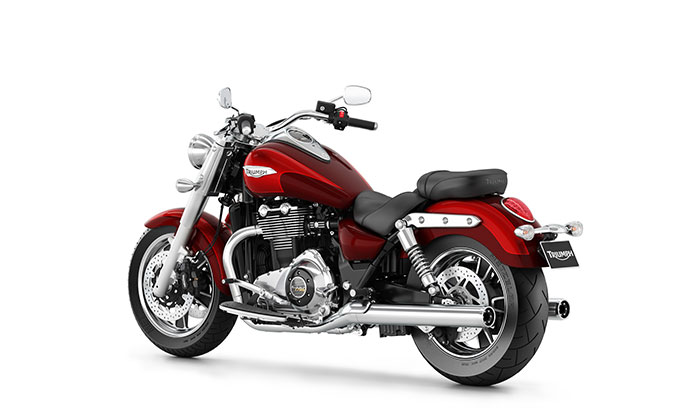
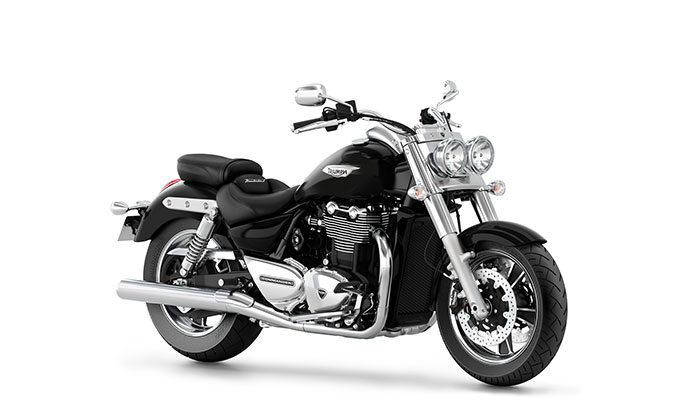
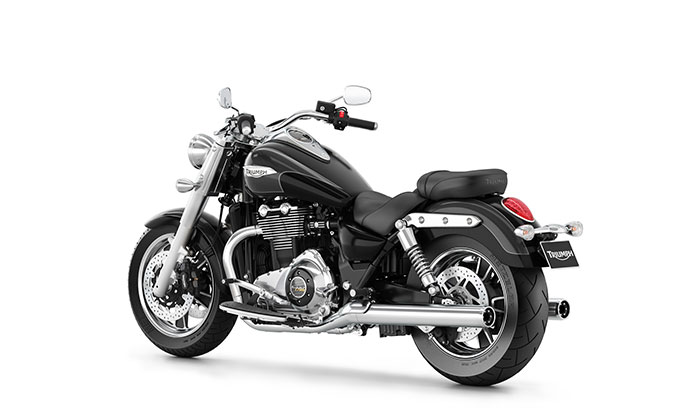
2015 Triumph Thunderbird Commander

2015 Triumph Thunderbird Commander

Back to 2015 Triumph Motorcycle Model Review Page

Click photos to enlarge. Our big, clean bike pics make great desktop wallpaper.

2015 Triumph Thunderbird Commander

2015 Triumph Thunderbird Commander

2015 Triumph Thunderbird Commander

2015 Triumph Thunderbird Commander

2015 Triumph Thunderbird Commander

2015 Triumph Thunderbird Commander Review

2015 Triumph Thunderbird Commander on www.Totalmotorcycle.com

To the onlooker, Triumph Cruiser bikes could be mistaken for being just about pure classic cruiser style…

But one ride tells you that they are about surprising levels of agility and performance in a bike that can deliver an engaging ride every day. They just happen to do it with that pure classic cruiser style.

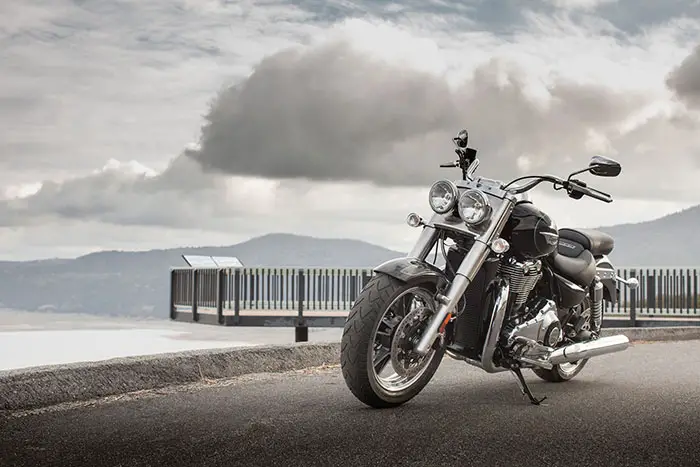
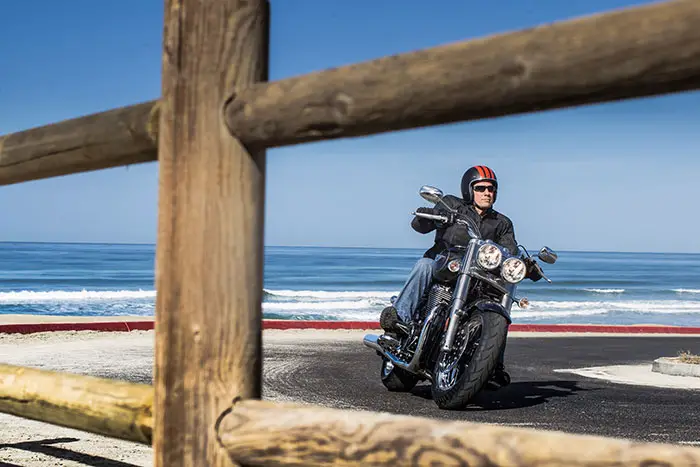
A strong, willing engine, refined chassis, powerful looks and broad riding position give our new Thunderbird Commander the power and presence to dominate any road. Based on our original Thunderbird, the Commander easily impresses riders and onlookers with its classic cruiser style, premium feel and the world's largest capacity parallel twin engine. And being a Triumph, it's a cruiser that also gives you day-long comfort, practicality, character and, on top of all that, superb handling. There's no compromise here.

2015 Triumph Thunderbird Commander www.Totalmotorcycle.com Key Features

The Thunderbird Commander combines custom cruiser styling with a strong willing engine, refined chassis and a broad riding position, without compromising any of the values normally associated with the segment.

Muscular styling combining wide wheels and tyres, shrouded forks, drainpipe exhausts and generous chrome highlights,
High press die-cast aluminium footboards, featuring replaceable skid plates
Wide rider footboards and Triumph's signature twin headlamps.
Substantial accessory range available.

The Thunderbird Commander is available in:

Lava Red & Crimson Sunset
Phantom Black & Storm Grey

2015 Triumph Thunderbird Commander www.Totalmotorcycle.com Features and Benefits

Styling
Engine

Along with the rest of the Commander, this engine was designed to have impact on the eye as well as the road, with machined engine fins and chrome covers contrasting against deep black barrels and crankcases.
Chassis

The Thunderbird Commander is bold all over. We took the engine's dominant styling and continued the theme across the entire bike with the quality and level of detailing you'd only expect from a Triumph cruiser. A massive polished top yoke and polished stainless steel fork shrouds, signature Triumph twin headlamps, bespoke Commander badges and Art Deco LED tail light and rear indicator assembly all combine for a powerful, low, lean, sleek custom cruiser look.

Colors
Crimson Sunset / Red Lava Red – $16,399
Phantom Black / Storm Grey – $16,399
Jet Black – $15,999

Styling
Engine

Along with the rest of the Commander, this engine was designed to have impact on the eye as well as the road, with machined engine fins and chrome covers contrasting against deep black barrels and crankcases.
Chassis

The Thunderbird Commander is bold all over. We took the engine's dominant styling and continued the theme across the entire bike with the quality and level of detailing you'd only expect from a Triumph cruiser. A massive polished top yoke and polished stainless steel fork shrouds, signature Triumph twin headlamps, bespoke Commander badges and Art Deco LED tail light and rear indicator assembly all combine for a powerful, low, lean, sleek custom cruiser look.

Engine
Overview

This is the largest capacity parallel twin motorcycle engine in the world. Based on the original Thunderbird parallel twin, the beating heart of the new Commander generates an organic, torque-rich riding experience unmatched for sheer grunt and ease-of-use.
Configuration

Being a Triumph, the Thunderbird Commander is packed full of modern engineering. We added double overhead camshafts and a crankshaft with 270 degree firing intervals, to give you an engine with authentic cruiser character. Whilst the fuelling is looked after by a sequential fuel injection system and progressive throttle linkage so your engine delivers its torque exactly the way you expect.
Belt Drive

We gave the Commander a belt final drive for low maintenance and long life.
Performance

Powered by a pair of saucer-sized forged pistons, the 1699cc eight-valve, DOHC engine's uneven 270° firing interval and long-stroke design produces a potent 94PS (93bhp) at 5400rpm and a huge 151Nm (111 lb.ft) of torque at a lowly 3550rpm, giving the Commander bags of twin-cylinder character.
Transmission

Developed and refined by our engineers so that the Commander gives you performance through a seamless, snatch-free transmission.

Chassis
Overview

There's no handling compromise when you choose a Triumph cruiser, and the Thunderbird Commander is no exception. Engineered to be responsive, agile and deceptively easy to turn, even at low speeds, the Commander marries tuned geometry with a low centre of gravity to make it steer as beautifully as it looks.
Frame

A dynamic engine with dynamic styling demands an equally dynamic chassis; one which reflects our belief that every bike, whatever its style, should be agile yet stable, have predictable, neutral steering and superior suspension and brakes. The Thunderbird Commander is no exception to that rule.
Wheels and Tyres

Fat-section 140/75 17-inch front and 200/50 17-inch rear tyres running on diamond-turned cast wheels.
Suspension

The Commander's handling is further enhanced by a chassis specification worthy of sportier bikes. It features shrouded 47mm Showa forks, twin 5-way preload adjustable Showa rear shocks, with optimised dual-rate springs, keeping you isolated from bumps but in touch with the road.
Brakes

Dual four-pot Nissin callipers on 310mm floating discs up front and a single Brembo calliper and 310mm disc at the rear, in conjunction with latest generation Triumph ABS, provide efficient performance and effortless braking control.
Handling

From the moment you roll forward on the Thunderbird Commander, you'll notice that handling control is a priority, not an afterthought. Light, neutral steering belies the width of the tyres, gives the rider form and function in one package. The parallel twin engine's compact weight distribution means the centre of gravity is focused in front and below your knees, giving the Commander a gentle, even tilt into turns.
Footboards

The Thunderbird Commander gives you high quality foot-boards made from chromed high-pressure die-cast aluminium, featuring replaceable skid plates and an adjustable heel/toe gear lever.
Seat

Rider and pillion seat foam is a double-layer, dual-density material, soft and receptive on first feel but compressing to give a firmer, supportive yet pliant ride. The rider's seat has also been especially shaped with wide, flared sides and a lumbar support to provide maximum comfort even at the end of a long day's ride.
Tank

A massive 22 litres fuel tank with off-centre filler cap.
Instruments

Tank-mounted dash console including classic analogue-style speedometer, a fuel gauge and an LCD with range-to-empty, twin trips, odometer and clock functions, conveniently scrollable via a handlebar-mounted button.
Silencer

Twin, straight-cut drainpipe silencers so wherever you ride you'll be accompanied by the Commander's stirring exhaust note, specially tuned for pitch perfect progress.


2015 Triumph Thunderbird Commander – www.Totalmotorcycle.com USA Specifications/Technical Details
US MSRP Price: $15999 USD

Engine and Transmission

typeLiquid-cooled, DOHC, Parallel-twin, 270º firing interval
capacity1699cc
bore107.1mm
stroke94.3mm
systemMultipoint sequential electronic fuel injection, progressive linkage on throttle
exhaustChromed twin-skin stainless steel 2 into 1 into 2, tandem large-volume catalysts in centralized catbox, chrome-plated exhaust
final driveToothed Belt
clutchWet, multi-plate
gearbox6-speed, helical type 2nd – 6th
oil capacity1.1US Gallon

Chassis Running Gear and Displays

frameTubular Steel, twin spine
swingarmTwin-sided, steel
Front WheelsCast aluminum alloy 5-spoke 17 x 3.5 in
Rear WheelsCast aluminum alloy 5-spoke 17 x 6 in
Front Tires140/75 ZR17
Rear Tires200/50 ZR17
Front SuspensionShowa 47mm forks. 120mm travel
Rear SuspensionShowa chromed spring twin shocks with 5 position adjustable preload. 95mm rear wheel travel
brakes frontTwin 310mm floating discs. Nissin 4-piston fixed calipers, ABS
brakes rearSingle 310mm disc. Brembo 2-piston floating caliper, ABS
instrument display and functionsAnalogue speedometer and fuel gauge. LCD trip computer, range to empty and clock. LCD function scroll button on handlebars.

Dimensions and Capacities

length2340mm
width handlebars880
height without mirror1120mm
seat height700mm
wheelbase1615mm
rake32º
trail151mm
tank capacity5.8us gallon
wet weight339 kilo
dry weight317 kg

Performance

max power ec 94BHP @ 5400
max torque ec146NM @ 2750

Fuel Consumption

urban38us mpg
56mph/90kph56us mpg


2015 Triumph Thunderbird Commander – www.Totalmotorcycle.com Canadian Specifications/Technical Details
Canada MSRP Price: $ CDN


2015 Triumph Thunderbird Commander – www.Totalmotorcycle.com European Specifications/Technical Details
Europe/UK MSRP Price: £13299 GBP (On The Road inc 20% Vat)

Engine and Transmission

typeLiquid-cooled, DOHC, Parallel-twin, 270º firing interval
capacity1699cc
bore107.1mm
stroke94.3mm
systemMultipoint sequential electronic fuel injection, progressive linkage on throttle
exhaustChromed twin-skin stainless steel 2 into 2 headers, tandem forward mounted large-volume catalysts, chrome-plated silencers
final driveToothed Belt
clutchWet, multi-plate
gearbox6-speed, helical type 2nd – 6th
oil capacity4.2L

Chassis, Running Gear and Displays

frameTubular Steel, twin spine
swingarmTwin-sided, steel
Front WheelsCast aluminium alloy, 5 spoke, 17 x 3.5 inch
Rear WheelsCast aluminium alloy, 5 spoke, 17 x 6.0 inch
Front Tyres140/75 ZR17
Rear Tyres200/50 ZR17
Front SuspensionShowa 47mm forks. 120mm travel
Rear SuspensionShowa twin shocks with 5 position adjustable preload. 108.5mm rear wheel travel
brakes frontTwin 310mm floating discs. Nissin 4-piston fixed calipers, ABS.
brakes rearSingle 310mm fixed disc. Brembo 2-piston floating caliper, ABS.
instrument display and functionsAnalogue speedometer and fuel gauge. LCD trip computer, range to empty and clock. LCD function scroll button on handlebars.

Dimensions and Capacities

length2442mm
width handlebars990
height without mirror1225mm
seat height700mm
wheelbase1665mm
rake30.1º
trail135mm
tank capacity22l
wet weight348 kg
dry weight317 kg

Performance

max power ec94BHP @ 5408
max torque ec151NM @ 3550

Manufacturer Specifications and appearance are subject to change without prior notice on Total Motorcycle (TMW).

2015 Triumph Thunderbird Commander

Source: https://www.totalmotorcycle.com/motorcycles/2015/2015-Triumph-Thunderbird-Commander

Share:
banner